

 Throughout the making of our project I have used the internet to post my work onto blogger as well as to research and plan the film. In particular I used youtube for looking at title sequences, radio trailers and other short films as well as using google as the main search engine throughout. A problem we came across was the server in college as the ban width weren't big enough for us to upload our film. iMDB was helpful for me too when researchin
g into film genres, I used BBFC to look into film certificates also. Communication in the group was done through mobile phones and facebook, which was convenient for all of us as we could all get in touch with each other easily. I had few problems during using the internet however when trying to put pictures on my posts as they often wouldn't go where I wanted them to which I overcome by editing the html.
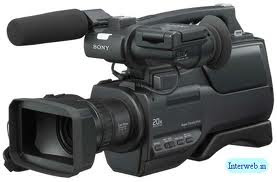
Our film 'Misguided' was created using Sony HD1000 cameras which are good quality cameras where you can get good quality filming in any location, the camera was generally easy to use and I feel like my filming skills have improved greatly. Another strength with the camera was the sound quality which was very clear. A problem we had with the camera was the focus rim on the camera, and therefore we struggled with a pulling focus shot as the camera has a spinning
focus rim (we
To edit our film we used final cut express which is widely used on
apple mac computers, I believe this programme has improved my creativity greatly. Final cut enabled us to cut out the shots that weren't needed and creating continuity. It also allowed us to alter the sound for example some conversation parts in the film weren't quite loud enough. We used different effects in the film such as fades, changing the colour, using cuts and flashes of light as well as speeding up shots such as in the party scene where everyone is stood around Fiona in a circle laughing. We didn't have any major problems the the mac's or the editing
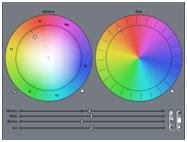 software however sometime it was time consuming such as rendering the film when adding in new shots as well as when transferring our footage onto the computer. We also used a zoom recorder to record voice-overs for our film in a quiet room which we then put on the mac and edited and added to our film in final cut express.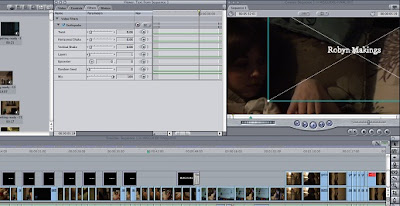
To create our poster we all created individual designs and then as a group decided on a final poster design. The final poster was made on Photoshop, we used a photography studio to take pictures on a SLR camera to put on the poster. For our radio trailer we used final cut express which worked in our favour as we were very familiar with it. We recorded voice overs on a zoom recorder, took some sound from our film and used some copyright free music which works very well with the sound from the film, we also added in fades and sound bridges to make the trailer sound the best we could make it.
In conclusion I feel like the media technologies I have used has helped me improved my overall media skills such as editing, researching, sound recording and blogging, as well as boost my creativity. I think that any problems that occurred throughout the project I have able to overcome resulting in a successful project.

 through editing the titles and certain shots to the offbeat of the music so it had a smooth, consistent feel to it. We also made good use of jump cuts so we could show a passage of time throughout her daily morning routine in a way that looked convincing but was time efficient as we only had 5 minutes to fit our entire film into and so couldn’t waste too much time on our opening montage. However, to avoid the film looking too jumpy, we made sure to include longer shots and make use of continuity in between all of our jump cut sequences, for example, when Fiona leaves the house and gets into her car we obey the 180 degree line rule and make use of match on action.
 We include intertextuality within our film while Fiona is getting ready. In our film, there are cross cuts between Fiona applying make up and her walking down the stairs, and in the teen drama 'Wild Child' you're shown a similar sequence of cross cuts of a group of girls getting ready and then walking down some stairs. We believed this scene would be good to reference within our own film as we wanted to create an upbeat, flowing sequence that presented how a girl can go from geek to glamorous in a time efficient manner.
 texts and layout all complimented our logo well. During the evaluation stage, the internet proved to be very helpful as we uploaded all of our finished products (film and radio trailer) onto YouTube (we faced a problem relating to bandwidth at one point due to college server issues, but it was soon overcome) and then straight onto the social networking site, Facebook, where we were then able to share our video with an online community and gather feedback instantly from our target audience and others, which made gathering audience feedback very easy.
  Once we'd overcome all problems with the camera, we were able to finalise filming and begin editing our film. I think we learnt a lot throughout editing as we attempted things that we hadn't last year, for example, we keyframed some of the text on our titles to position them exactly, we edited cuts to fit in with the beat of the music used to give a sense of consistency, we played around with audio levels to lower or higher voices and music wherever necessary (we filmed without music playing and edited it in afterwards) and we took advantage of effects such ‘flashback’ to give our film a gripping edge. Examples of what I believe to be our best editing are at the end of the film where there is the use of several sound snippets from the film to create an eerie, haunting flashback for Fiona, and the scene where Fiona is getting ready as shots are edited to the beat and we use cross-cutting between her getting ready and walking down the stairs.
  As well as creating a film, we had to consider a radio trailer and poster. As a graphics student, I found creating the poster to be an exciting task and took advantage of the skills I posses by using Photoshop to mock up poster designs. When creating our final poster we also took advantage of our access to a photography studio and took photos using an SLR style digital camera to give us high quality photos that we could then use within our final poster. When creating our radio trailer, we decided to compose it using a combination of Garageband and Final Cut Express. It is made up of sound snippets from our film, copyright free music we found on college CDs and voiceovers that we recorded using a zoom recorder. I believe that creating a radio trailer has helped to enhance my creativity as I had to consider telling a story verbally without giving it away; something which is easy to achieve when using images as they tend to speak for themselves. Although this task was difficult, I believe we overcame it successfully and managed to blend a mysterious narrative alongside film snippets to create a wonder-inducing radio trailer that will hopefully intrigue people enough to watch our film.

